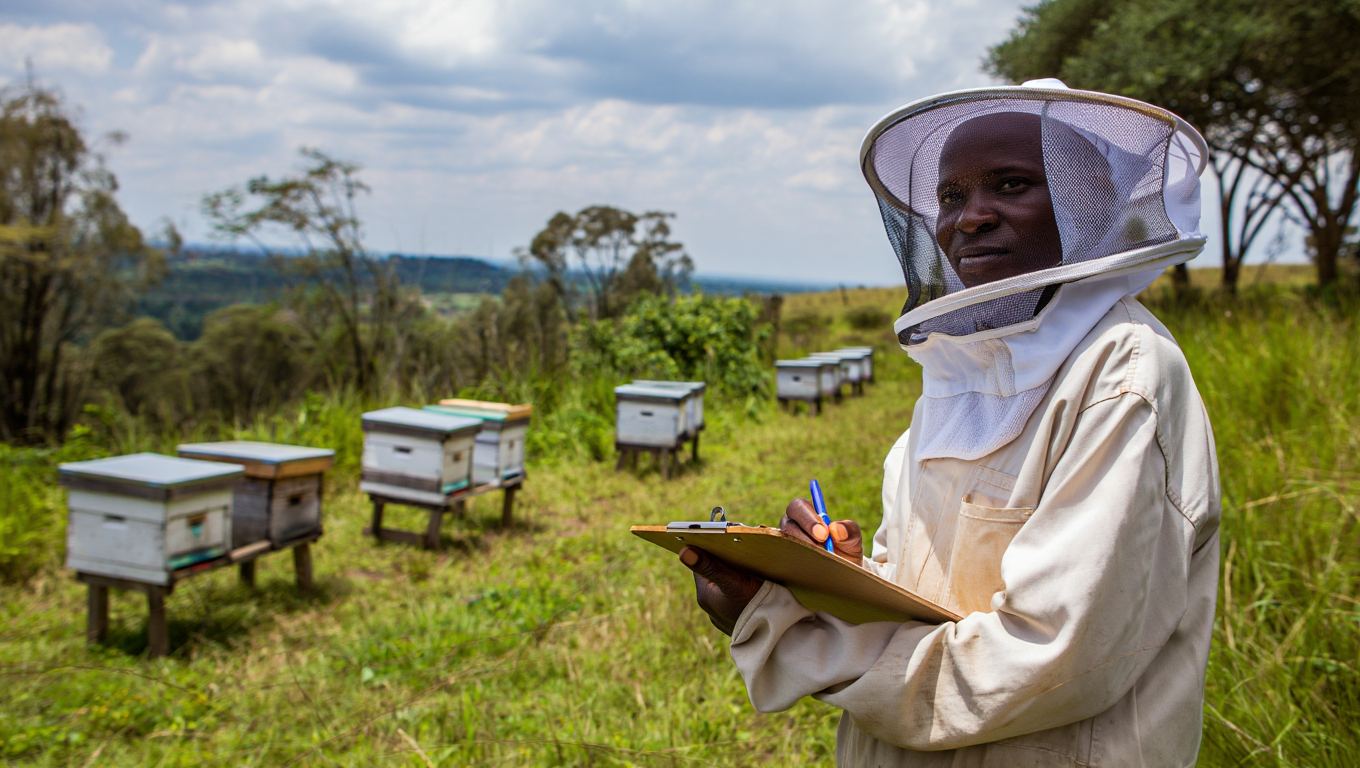
Since 2007, we at Modern Bee Farmers have been working with beekeepers across Kenya, from the pristine landscapes of our own apiaries to county government partnerships promoting sustainable beekeeping. Through sixteen years of operations in Nairobi’s Mirema and Ruaraka areas, we’ve seen growing interest in raw honey in Kenya and just as many questions about what makes it different, beneficial, and worth choosing over processed alternatives.
This guide combines our hands-on experience producing organic Kenyan honey with scientific research from international health authorities, Kenya Bureau of Standards (KEBS) regulations, and a few peer-reviewed studies.
What is Raw Honey? Understanding the Difference
Raw Honey vs Processed Honey: The Scientific Definition
The Codex Alimentarius, which is the international food standards body jointly operated by the Food and Agriculture Organization (FAO) and World Health Organization (WHO), defines honey as “the natural sweet substance produced by honey bees from the nectar of plants… which the bees collect, transform by combining with specific substances of their own, deposit, dehydrate, store and leave in the honey comb to ripen and mature.”
Critically, Codex standards specify that honey “shall not be heated to such an extent that its essential composition and quality is impaired.” This is the foundation of what distinguishes raw from processed honey. Read the whole article here
Raw honey is honey that has not been heated above the natural temperature of a beehive (approximately 35-46°C or 95-115°F). It is unfiltered or only minimally strained to remove debris like wax particles, leaving intact the naturally occurring components that bees introduce during honey production.
Processed (pasteurized) honey is heated to temperatures of 71°C (160°F) or higher, then fine-filtered or ultrafiltered. This process extends shelf life and prevents crystallization, but it fundamentally changes the honey’s composition.
Why Processing Matters? What’s Lost in Commercial Honey
When honey is heated above 40°C (104°F), several things happen:
Enzyme destruction: Raw honey contains approximately 5,000 enzymes, including glucose oxidase, which produces hydrogen peroxide, one of honey’s key antimicrobial agents. High-heat pasteurization destroys these enzymes.
Nutrient degradation: According to nutritional research, processing removes or significantly reduces:
- B-complex vitamins (B6, thiamine, riboflavin, pantothenic acid, niacin)
- Minerals (iron, zinc, potassium, calcium, phosphorus, magnesium, selenium)
- Amino acids and proteins
- Antioxidant compounds
Pollen removal: Ultrafiltration removes bee pollen, which contains over 250 substances including proteins, fatty acids, vitamins, and minerals. Beyond nutrition, pollen serves as a geographic and botanical identifier—its absence makes honey origin verification impossible.
Propolis elimination: Raw honey contains trace amounts of propolis, a resinous substance bees produce with its own antimicrobial and antioxidant properties. Processing removes this.
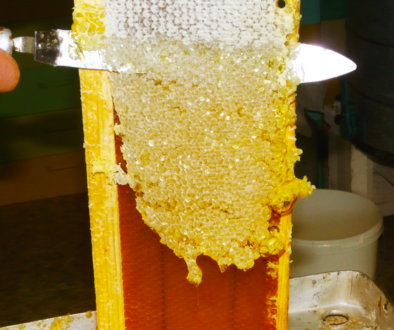
Our organic Kenyan honey at Modern Bee Farmers is extracted through gravity draining and minimal straining—we don’t pasteurize, or ultrafilter. What you receive is honey as bees made it, with all naturally occurring components intact.
The Science Behind Raw Honey’s Health Benefits
Before discussing health benefits, an important caveat: The European Food Safety Authority (EFSA) concluded in 2010 that honey was “not sufficiently characterized” to support specific health claims under EU regulations. More standardized research is needed.
The benefits discussed here are based on peer-reviewed studies but should not be considered medical claims.
Antioxidant Properties: Research-Backed Evidence
A bibliometric analysis of 383 honey studies (2001-2022) published in the journal Oxidative Medicine and Cellular Longevity identified approximately 30 types of polyphenols in honey that function as antioxidants.
Key antioxidant compounds in honey include:
- Phenolic acids: gallic acid, syringic acid, ellagic acid, benzoic acid, cinnamic acid, chlorogenic acid, caffeic acid, ferulic acid, coumaric acid
- Flavonoids: quercetin, kaempferol, galangin, luteolin, isorhamnetin, myricetin, chrysin, apigenin, catechin, naringenin, hesperetin
- Enzymes: glucose oxidase, catalase
- Other compounds: ascorbic acid, carotenoids, amino acids, proteins
These bioactive compounds work synergistically to neutralize free radicals and reduce oxidative stress, a factor implicated in chronic diseases including cardiovascular disease, certain cancers, and neurodegenerative conditions.
The antioxidant capacity of honey varies based on botanical origin, with darker honeys generally containing higher polyphenol concentrations. However, even light-colored honeys demonstrate measurable antioxidant activity.
Antimicrobial Activity: How Raw Honey Fights Bacteria
Honey’s antimicrobial properties are well-documented in medical literature. A comprehensive review in Asian Pacific Journal of Tropical Biomedicine identified multiple mechanisms:
Primary mechanisms:
- Hydrogen peroxide production: The enzyme glucose oxidase (present in raw honey, destroyed in processed honey) converts glucose and water into gluconic acid and hydrogen peroxide, a natural antimicrobial agent.
- Osmotic pressure: Honey’s high sugar content (typically 70-80%) creates a hyperosmolar environment that dehydrates bacteria.
- Low pH: Honey is naturally acidic (pH 3.2-4.5), inhibiting many pathogens that require neutral pH environments.
- Phytochemical compounds: Polyphenols including terpenes, benzaldehyde, and volatile aldehydes contribute antibacterial effects independent of peroxide activity.
Effectiveness spectrum:
Research published in Antibiotics (MDPI journal) demonstrated honey’s activity against:
- Gram-positive bacteria: Staphylococcus aureus, Bacillus subtilis, Streptococcus species
- Gram-negative bacteria: Escherichia coli, Pseudomonas aeruginosa, Salmonella, Klebsiella pneumoniae
- Fungi: Candida species, Aspergillus species
A Slovak study testing honey at varying concentrations found that 50% honey solutions showed strongest inhibition against Pseudomonas aeruginosa (17.67mm inhibition zone) among Gram-negative bacteria and Bacillus subtilis (13.00mm) among Gram-positive bacteria.
Clinical significance: While honey shows antimicrobial activity in laboratory settings, it should not replace antibiotics for serious bacterial infections.
Supporting Cardiovascular and Metabolic Health
A systematic review published in Nutrients (PMC article PMC10346535) analyzing multiple clinical trials found:
Cardiovascular effects:
- Honey consumption was associated with modest reductions in fasting blood glucose
- Increased HDL cholesterol (the “good” cholesterol)
- Potential reduction in inflammation markers
Diabetes management: Seventeen clinical trials (1985-2022) involving 3,655 subjects showed that honey improved glycemic control and reduced HbA1c levels in diabetic patients. However, honey is still a sugar source and must be used under medical supervision by diabetics. It’s not a replacement for medication or dietary management.
Mechanism: The fructose and glucose in honey are absorbed differently than refined sugar, potentially causing less dramatic blood sugar spikes. Additionally, honey’s antioxidant compounds may improve insulin sensitivity.
Important limitation: These effects were observed with moderate consumption. Excessive honey intake (like any sweetener) contributes to caloric excess and potential weight gain.
Wound Healing and Anti-Inflammatory Effects
Honey has been used topically for wound care across cultures for millennia. Modern research published in BMC Complementary Medicine and Therapies provides mechanisms:
Wound healing properties:
- Maintains moist environment: Essential for optimal healing
- Provides protective barrier: Prevents contamination
- Immunomodulatory effects: Influences immune response relevant to tissue repair
- Stimulates tissue growth: Promotes new tissue formation
- Removes exudate: Helps manage inflamed wounds
Anti-inflammatory effects: Studies show honey reduces inflammation markers and promotes faster healing compared to conventional dressings in certain wound types.
Clinical use: Medical-grade honey (sterilized through gamma irradiation, not heat) is used in some healthcare settings. Raw honey should not be applied to deep or serious wounds without medical guidance.
Raw Honey Quality Standards in Kenya
KEBS Certification and What It Means
The Kenya Bureau of Standards (KEBS) is the government regulatory body operating under the Ministry of Investment, Trade and Industry. Established in 1974, KEBS develops and enforces product quality standards across Kenya.
For honey, KEBS operates two certification schemes:
1. S-Mark (Standardization Mark): Certifies products meet minimum quality standards for local Kenyan market sale. This involves:
- Regular testing of honey samples
- Factory inspection of processing facilities
- Verification of handling procedures
- Confirmation of labeling accuracy
2. D-Mark (Diamond Mark): Certifies export-quality honey meeting international standards. Requirements include:
- All S-Mark requirements plus:
- Certificate of Analysis from KEBS-accredited laboratories
- PHYTOSANITARY certificate from Kenya Plant Health Inspectorate Service
- HACCP (Hazard Analysis Critical Control Points) certification for processing facilities
- Compliance with destination country regulations
What KEBS tests:
- Moisture content
- HMF (Hydroxymethylfurfural) levels – indicator of heat damage or age
- Diastase activity-enzyme that indicates honey hasn’t been overheated
- Acidity levels
- Sugar composition (reducing sugars, apparent sucrose)
- Contaminants (pesticides, heavy metals, antibiotics)
Codex Alimentarius International Standards
The Codex Alimentarius Commission (established 1963) sets international food standards. The “Standard for Honey” (CXS 12-1981, most recently amended 2022) defines quality parameters recognized globally:
Key Codex honey standards:
- Maximum moisture: 20% (prevents fermentation)
- Maximum free acidity: 50 milliequivalents per 1000g
- Electrical conductivity: ≤0.8 mS/cm (higher for honeydew honey)
- Maximum ash content: 0.6 g/100g
- No food additives permitted
- No chemical/biochemical treatments to influence crystallization
Critical processing requirement: Honey “shall not be heated to such an extent that its essential composition and quality is impaired.”
Filtration disclosure: Honey that has been filtered “in such a way as to result in the significant removal of pollen shall be designated” as filtered honey on labels.
These standards protect consumers globally and ensure honey remains a natural, unadulterated product.
How Kenya Honey Compares Globally
Kenya produces approximately 25,000 metric tons of honey annually, according to agricultural export data. Research published in academic journals examining Kenyan honey quality found:
Northern Kenya study (14 months storage):
- Mean moisture content: 18.0% (well below 20% maximum)
- Reducing sugars: 69.5% (meets standard)
- Apparent sucrose: 2.8% (meets standard)
- Acidity: 26.1 meq/kg (well below 50 maximum)
- HMF: 3.6 mg/kg (very low, indicates minimal heat exposure or aging)
Comparative study of 19 local and imported honey samples: Kenyan honey samples met KEBS and International Honey Commission requirements. Diastase activity and HMF were key quality discriminators—Kenyan honey produced with simple straining methods retained high enzyme activity.
Geographic advantage: Kenya’s diverse floral sources (acacia, eucalyptus, wildflowers) produce honey with varied flavor profiles and antioxidant compositions. The lack of industrial agriculture in many honey-producing regions means lower pesticide contamination risk.
Modern Bee Farmers sources from carefully selected apiaries where bees forage in chemical-free environments, a practice that supports both bee health and honey purity.
Identifying Genuine Raw Honey: A Practical Guide
Visual and Textural Characteristics
Appearance:
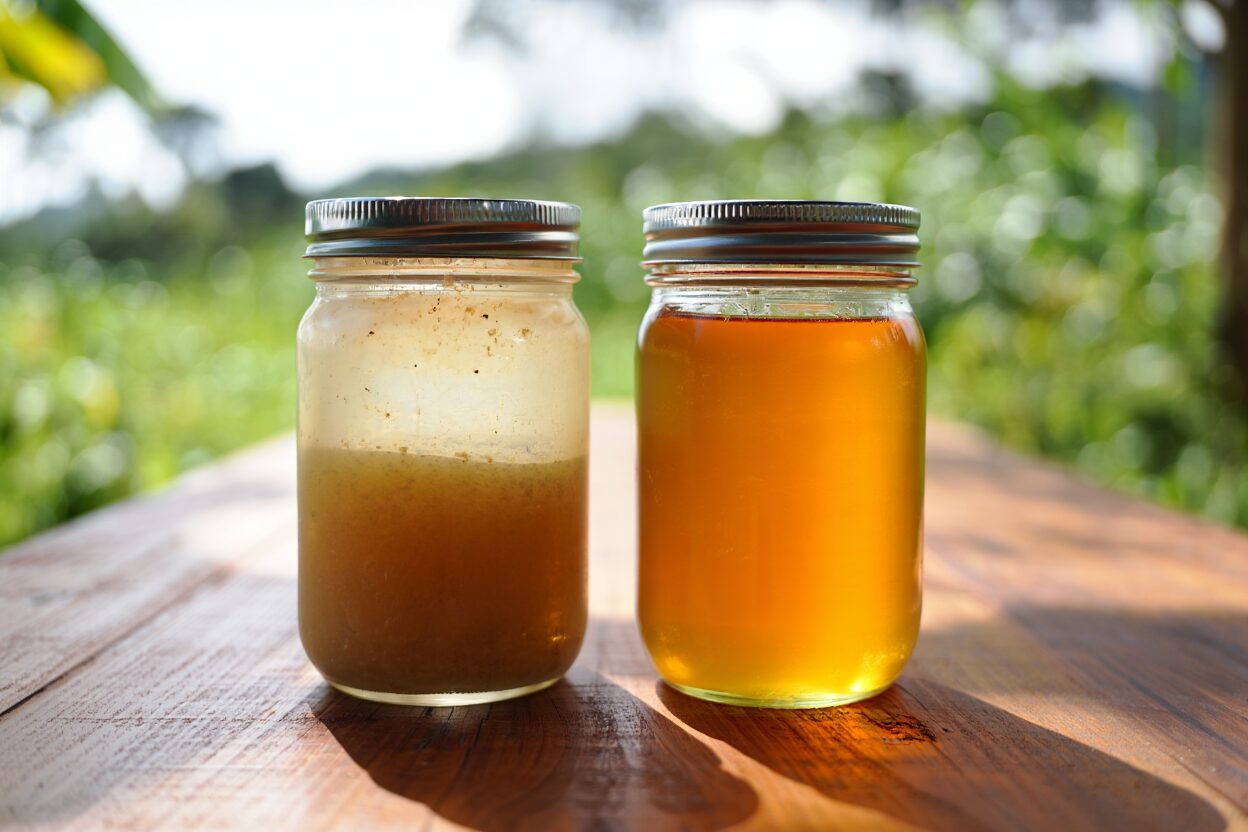
- Raw honey: Cloudy, opaque, may have visible suspended particles (pollen, propolis fragments, tiny wax particles). Color ranges from nearly clear (acacia) to dark amber (wildflower) depending on nectar source.
- Processed honey: Crystal clear, uniformly colored, translucent with no visible particles.
Texture:
- Raw honey: Viscous, thick, flows slowly. May have varying consistency from top to bottom of jar as heavier particles settle.
- Processed honey: Uniformly smooth, consistent texture throughout.
Neither appearance is inherently better than the other, they simply indicate different processing levels. The cloudy appearance of raw honey reflects retained natural components.
Understanding Crystallization (And Why It’s a Good Sign)
One of the most misunderstood aspects of raw honey is crystallization, the formation of grainy crystals that make liquid honey solid or semi-solid.
Why honey crystallizes:
All honey contains glucose and fructose in different ratios. Glucose is less soluble than fructose and naturally wants to precipitate out of solution, forming crystals. The ratio of glucose to fructose (which varies by nectar source) determines crystallization speed:
- High glucose honey (like wildflower): Crystallizes quickly (weeks to months)
- High fructose honey (like acacia): May remain liquid for years
Crystallization is a sign of raw, unprocessed honey. Processed honey has been heated and filtered to prevent crystallization for shelf appeal.
Factors affecting crystallization rate:
- Temperature: Crystallization occurs fastest around 14°C (57°F)
- Pollen and particles: Act as nucleation sites, speeding crystallization
Common crystallization misconception: Crystallized honey has NOT “gone bad” or “spoiled.” Honey has an indefinite shelf life due to low moisture and acidic pH. Crystallization is purely physical, not a quality issue.
Red Flags: What to Avoid
Warning signs of adulterated or low-quality honey:
- Unnatural uniformity: Honey that never crystallizes, even after months at room temperature, may be highly processed or adulterated with corn syrup.
- Fermentation signs: Fermenting Honey. Bubbles, foam on surface, or alcohol smell indicate moisture content above 20%
- Caramelized appearance: Dark brown color with burnt sugar smell suggests overheating.
Health Benefits Supported by Scientific Research
This section focuses on health benefits with stronger research backing, while acknowledging limitations.
Respiratory Health and Cough Relief
Evidence: The WHO recognizes honey as a potential treatment for upper respiratory tract infection symptoms. A Cochrane review of multiple studies found honey more effective than usual care for symptom improvement and cough frequency reduction in children with acute respiratory infections.
Mechanism: Honey’s thickness coats the throat, providing temporary relief. Its antimicrobial properties may help reduce bacterial load. Antioxidants support immune function.
Application: One to two teaspoons of honey before bed for children over 1 year old (never give honey to infants under 12 months—risk of botulism). For adults, honey can be mixed with warm (not hot) water or herbal tea.
Limitations: Honey relieves symptoms but doesn’t cure infections. Serious respiratory illnesses require medical treatment.
Digestive System Support
Evidence: Research published in Asian Pacific Journal of Tropical Biomedicine notes honey’s traditional use for peptic ulcers and gastritis. Studies suggest honey may:
- Promote repair of damaged intestinal mucosa
- Stimulate growth of new tissues in gastrointestinal lining
- Work as an anti-inflammatory agent in the digestive tract
Mechanism: Honey’s antimicrobial activity against Helicobacter pylori (bacteria associated with ulcers), anti-inflammatory compounds, and potential prebiotic effects (supporting beneficial gut bacteria).
Application: Some research used 1-2 tablespoons of honey before meals, but more standardized studies are needed.
Limitations: Honey is not a replacement for H. pylori treatment (antibiotics) or acid-reducing medications. Anyone with serious digestive issues should consult healthcare providers.
Blood Sugar Management (for diabetics under medical supervision)
Evidence: Seventeen clinical trials involving 3,655 diabetic subjects found honey consumption improved glycemic control and reduced HbA1c levels compared to other sweeteners or no intervention.
Critical context:
- Honey is still a sugar. It contains approximately 82g carbohydrates per 100g.
- It raises blood glucose, though potentially less dramatically than refined sugar
- Diabetics must account for honey in their carbohydrate intake
- Use only under medical supervision and blood glucose monitoring
Mechanism: Different glucose-to-fructose absorption rate compared to sucrose. Antioxidant compounds may improve insulin sensitivity slightly.
Application: Studies used small amounts (typically 1 tablespoon or less daily). This is NOT an endorsement for diabetics to freely consume honey.
Limitations: Honey should never replace diabetes medications or proper dietary management. Blood sugar response varies individually.
Important Limitations and What Science Doesn’t Prove
What research does NOT support:
- Honey as a cure for allergies
- Honey as a weight loss aid (it’s calorie-dense at 64 calories per tablespoon)
- Honey as a cancer treatment (while some compounds show anti-cancer properties in labs, this doesn’t translate to honey curing cancer)
- Honey as a replacement for vaccines, antibiotics, or proven medical treatments
General health context: Honey’s benefits must be considered within overall diet & health quality
How to Use and Store Raw Honey
Optimal Storage Conditions
Temperature: Room temperature (15-25°C) is ideal. Avoid refrigeration, which speeds crystallization.
Light exposure: Store in dark or opaque containers. Light degrades some antioxidant compounds over time.
Container: Glass or food-grade plastic with tight-fitting lid. Honey is hygroscopic (absorbs moisture from air) proper sealing prevents moisture absorption that could lead to fermentation.
Shelf life: Properly stored honey has indefinite shelf life. Archaeologists have found 3,000-year-old honey in Egyptian tombs that was still edible. As long as moisture stays below 20% and the container is sealed, honey won’t spoil.
Signs honey has absorbed too much moisture:
- Bubbles or foam on surface
- Alcohol or fermented smell
- Watery consistency on top
If this occurs, honey is fermenting.
Reversing Natural Crystallization
If you prefer liquid honey or need pourable consistency:
Gentle warming method:
- Remove lid from jar
- Place jar in bowl or pot of warm (not boiling) water
- Water temperature should be below 40°C , test with finger; should feel warm but not uncomfortably hot
- Let sit 20-30 minutes, stirring occasionally
- Crystals will dissolve back into liquid
Why low temperature matters: Temperatures above 40°C begin destroying enzymes and beneficial compounds. Never microwave honey or place on direct heat.
Alternative: Many people (us included) prefer crystallized honey. It spreads easily on bread and doesn’t drip when scooped with a spoon for a cup of tea.