When you’re harvesting honey from a small or medium-sized apiary in Kenya, the equipment you choose shapes how efficiently you work and how much product you recover. At Modern Bee Farmers, we’ve seen beekeepers weigh the same question repeatedly: should I invest in a honey extractor, or will a honey press machine do the job?
A honey press machine is one of the simplest tools for extracting honey from comb, and in certain situations, particularly for beekeepers managing fewer hives or working with comb honey, it can be the most practical choice. This article walks through what a honey press actually does, how it compares to other extraction methods, and what factors Kenyan beekeepers should consider before purchasing one.
What a Honey Press Machine Is (and How It Works)
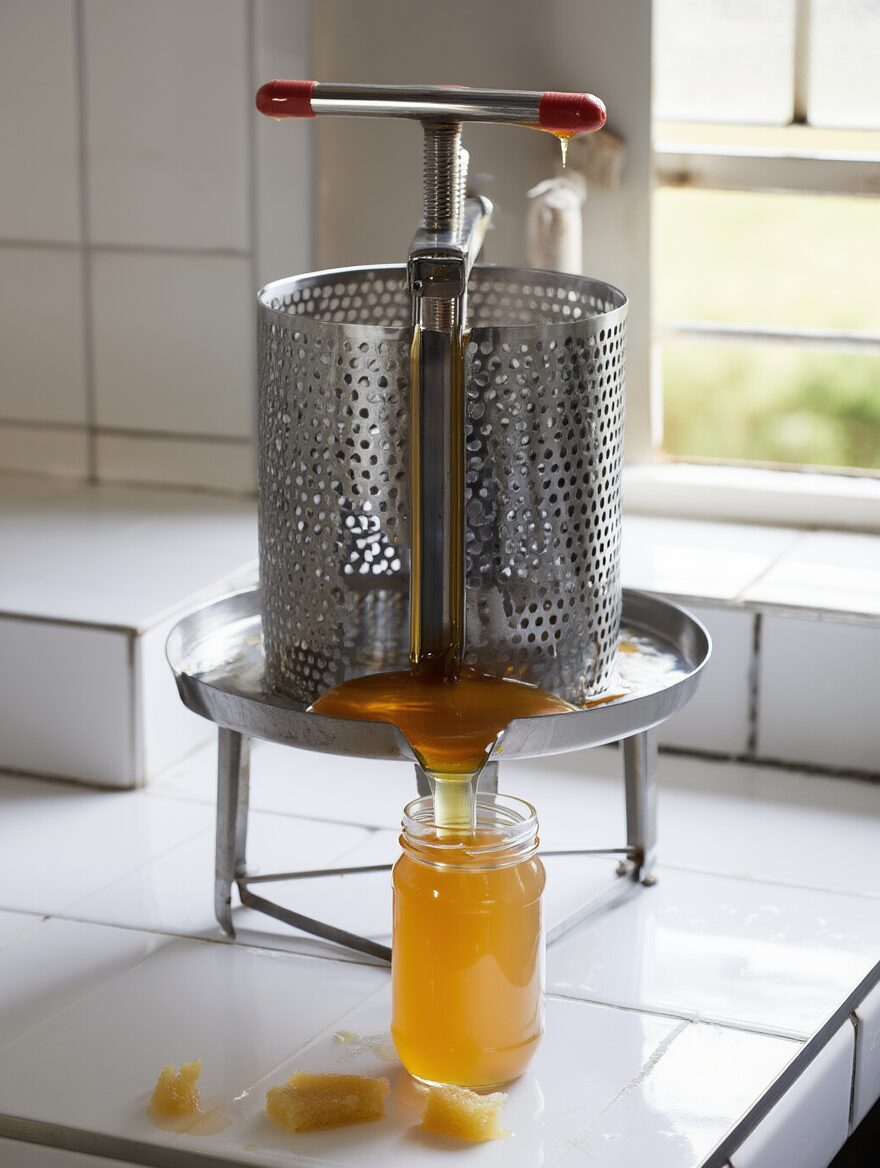
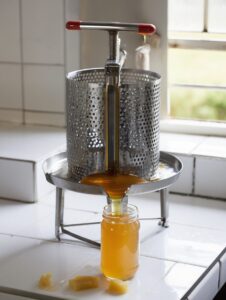
A honey press machine is a mechanical device that extracts honey by applying direct pressure to honeycomb. Unlike a centrifugal extractor, which spins frames to fling honey outward, a press physically squeezes the comb to release the liquid honey.
The basic design includes a pressing chamber, a perforated basket or plate that holds the comb, and a pressing mechanism which is typically a screw-driven plate or lever plunger. You place cut sections of honeycomb into the basket, apply steady pressure using the handle or screw, and the honey flows out through the perforations while the wax and debris are retained in the basket.
The honey collects in a lower chamber or drains directly into a container positioned beneath the press. What remains after pressing is a flattened cake of wax, pollen, and some residual honey that didn’t fully release.
Honey Press vs Honey Extractor. When Each Makes Sense
The most common question we hear from customers is whether they should go with a press or an extractor. The answer depends entirely on your operation.
A honey extractor works by spinning frames inside a drum. The centrifugal force pulls honey out of the cells while leaving the comb largely intact. This means frames can be returned to the hive for bees to refill, which saves the colony significant energy and speeds up subsequent harvests. Extractors are the standard choice for beekeepers managing Langstroth beehives where comb preservation matters.
A honey press machine, by contrast, destroys the comb. You’re crushing everything together, honey, wax, and sometimes pollen—and separating them mechanically. This makes a press impractical if you want to reuse drawn comb. However, presses have clear advantages in specific contexts:
- Comb honey harvesting: If you’re selling or consuming comb honey, a press handles the leftover or damaged sections that can’t be marketed as intact comb.
- Traditional hive types: In Kenya, some beekeepers still work with log hives or other traditional designs where comb isn’t built on removable frames. A press handles these irregular comb pieces easily.
- Wax recovery priority: If your goal includes recovering beeswax for sale or use, a press naturally consolidates wax during the extraction process.
We typically tell customers that if you’re running a modern hive system with removable frames and you plan to scale beyond a few hives, an extractor is almost always the better long-term investment. But if you’re working with fixed-comb hives, processing small volumes, or prioritizing simplicity and portability, a press can be the right tool.
Key Factors to Consider Before Buying a Honey Press Machine
If you’ve determined that a press fits your operation, the next step is choosing the right one. Here’s what we typically walk customers through:
Capacity
Honey presses in Kenya generally come in sizes ranging from small household models (processing aound 5 kg of comb at a time) to larger manual or semi-automated presses (handling 20 kg or more per batch).
Your choice should match your realistic harvest volume. A beekeeper with five hives producing 10-15 kg of honey per harvest can work comfortably with a smaller press. Someone managing 20-30 hives or processing for multiple beekeepers needs a larger capacity model to avoid spending entire days on extraction.
Don’t oversize unnecessarily, larger presses are heavier, take up more space, and cost more. Match the tool to the actual work.
Manual Operation
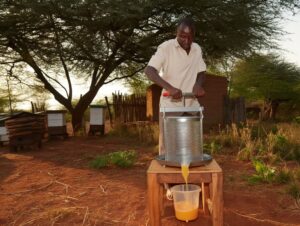
Most honey press machines available in Kenya are manual, operated by turning a screw handle or pulling a lever. This is practical for small to medium volumes, but it requires sustained physical effort.
If you’re pressing more than 20-30 kg of comb in a session, the repetitive cranking becomes tiring. Some beekeepers solve this by spreading extraction over multiple days or rotating operators. Electrically powered presses exist but are uncommon in the Kenyan market and add cost and complexity.
Consider who will actually be operating the press and whether the physical effort is sustainable for your harvesting frequency.
Ease of Cleaning
Honey is sticky, and pressed comb leaves behind wax residue, pollen particles, and crystallized honey in every corner of the press. A well-designed press should disassemble easily so you can clean the basket, pressing plate, and drainage areas thoroughly between uses.
Look for presses with smooth surfaces, minimal crevices, and parts that come apart without tools or with basic spanners. Stainless steel models clean more easily than painted mild steel, though they cost more. If cleaning becomes a frustrating, time-consuming task, you’re less likely to maintain the equipment properly—and that affects honey quality over time.
Wax Recovery
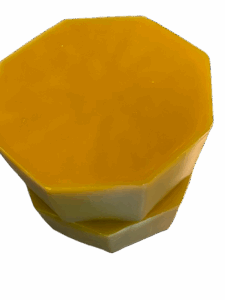
One secondary benefit of pressing is that you automatically recover beeswax. After pressing, you’re left with a compact cake of wax mixed with pollen and some residual honey. You can further process this by melting it down, straining out impurities, and forming clean wax blocks for sale or use in candle making, cosmetics, or hive foundation.
If wax recovery is important to you, factor in how easily your press consolidates the wax and whether the design allows you to remove the pressed cake cleanly.
Practical Limitations and Trade-Offs (Be Honest)
A honey press machine is not a universal solution. It has real trade-offs that beekeepers need to accept before purchasing.
Comb destruction: Once you press comb, it’s gone. You lose the energy the bees invested in building it, and they’ll need to rebuild from scratch. This slows down colony productivity compared to returning extracted frames for refill.
Lower honey yield per pressing: Pressing doesn’t release 100% of the honey in the comb. Some honey remains trapped in the wax matrix. A centrifugal extractor typically recovers more liquid honey from the same amount of comb.
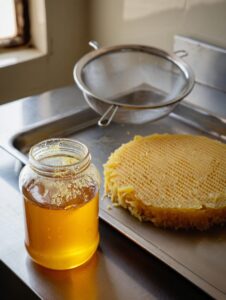
Wax contamination: The honey that comes out of a press often contains fine wax particles, pollen, and other solids. You’ll need to strain it carefully, and even then, pressed honey may have a slightly cloudy appearance compared to centrifuged honey. For some markets, this doesn’t matter. For others, clarity is a selling point.
Labor intensity: Pressing is slower than extracting, especially for larger volumes. If you’re processing 50 kg of comb, you’ll spend significantly more time pressing than you would spinning frames in an extractor.
These aren’t reasons to avoid a press,they’re just realities to plan for. If comb preservation doesn’t matter to you and you’re processing modest volumes, these trade-offs are manageable. If you’re scaling up or running a modern frame-based operation, they become harder to justify.
How We Typically Advise our Customers to Choose
When a beekeeper contacts us about honey pressing equipment, we start by asking a few practical questions:
- How many hives are you managing now, and how many do you expect to have in two years?
- Are you using modern frame-based hives or traditional fixed-comb hives?
- Do you have reliable access to electricity?
- What’s your priority, maximizing honey recovery, or simplicity and low cost?
- Are you harvesting regularly throughout the year, or once or twice annually?
These answers usually clarify the right path. For someone with five log hives in a rural area harvesting twice a year, a small manual honey press makes complete sense. For a beekeeper with 15 Langstroth hives planning to expand to 30, we’d typically recommend investing in a basic manual extractor instead, even if it costs more upfront.
We also remind customers that equipment decisions aren’t permanent. Many beekeepers start with a press, build up their operation, and later add an extractor as their hive numbers grow. The press doesn’t become useless, it shifts to handling comb scraps, cappings, and irregular pieces while the extractor handles the main harvest.
The key is matching the tool to your actual circumstances, not to an idealized version of what your operation might become someday
At Modern Bee Farmers, we’ve worked with Kenyan beekeepers long enough to know that there’s no single “best” extraction method, only the method that fits your specific situation. A honey press machine can be exactly the right tool, as long as you know what it does well and where its limits are.